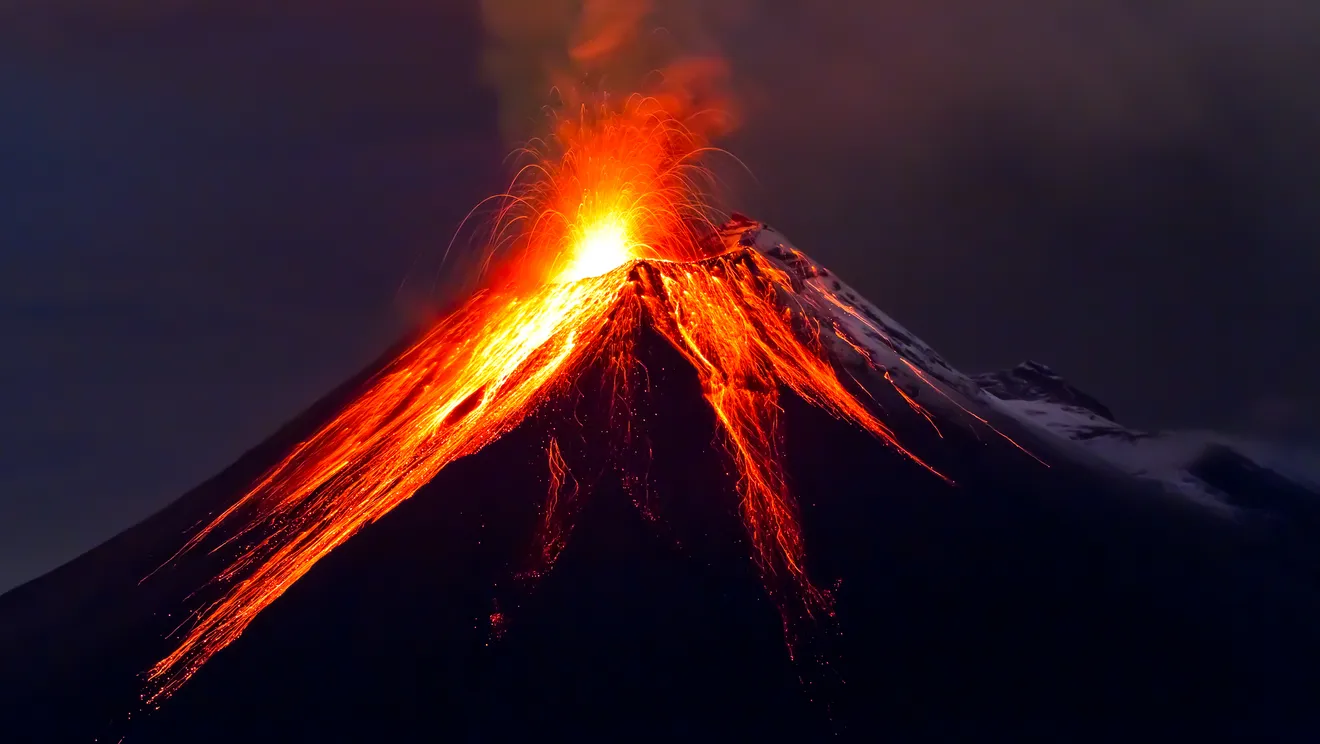
Volcano
A volcano is an opening in Earth's surface through which hot molten rock, gases, and ash can escape from beneath the ground. When molten rock is below the surface, it is called magma, but when it reaches the surface, it is known as lava. Volcanoes can be found on land and under the ocean, and many form near the edges of Earth's tectonic plates. Volcanic eruptions happen when pressure builds up inside the Earth, forcing magma and gases toward the surface. Some eruptions are gentle, while others can be very powerful and release large amounts of ash and lava. Although volcanoes can be dangerous, they also have positive effects on the environment. Volcanic materials can create fertile soil, form new land, and provide valuable minerals. Studying volcanoes helps scientists understand Earth's structure and predict possible volcanic activity.